
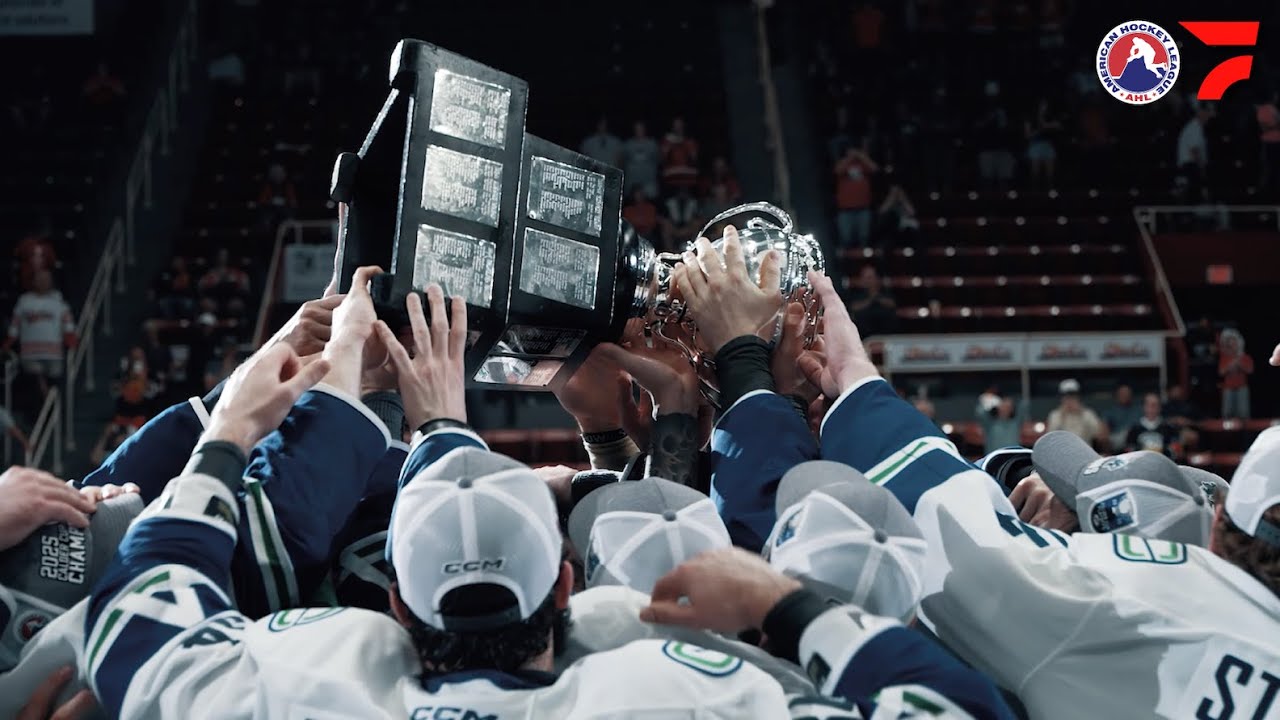
Shooting the Calder Cup Finals: My First Time Filming Hockey and What I Learned
When FloHockey asked me to film Game 6 of the Calder Cup Finals between the Abbotsford Canucks and the Charlotte Checkers, I said yes immediately.
There was just one problem.
I'd never filmed hockey before.
That meant learning one of the fastest sports in the world on the biggest stage I'd ever shot it. Less than 24 hours later, I also needed to deliver a cinematic highlight reel.
Here's exactly how I approached it, what gear I used, and what I learned along the way.
🎥 Gear I Used
Camera
- Sony FX6
Lenses
- Sony 70-200mm f/2.8
- Sony 100-400mm f/4.5-5.6
- Sigma 14-24mm f/2.8
The 70-200mm stayed on the camera most of the night. The 100-400mm helped isolate players across the ice, while the 14-24mm was perfect for establishing shots, crowd reactions, and capturing the atmosphere inside the arena.
🏒 Learning Hockey on the Fly
Going into the game I had one rule.
Don't stand still.
The story isn't only happening on the ice.
It's on the bench.
It's in the crowd.
It's with the officials, the ice crew, and the players celebrating after the whistle.
I spent the entire night moving.
As the game went on, I started recognizing patterns and anticipating where the puck was headed instead of reacting after it got there.
By the second period, I wasn't just trying to keep up anymore.
I could finally start thinking creatively.
🎬 Building the Highlight Reel
As soon as the final horn sounded, I headed straight into Premiere Pro.
The goal wasn't simply to recap the game.
I wanted viewers to feel like they were there.
🎙️ 1. Let the Broadcast Tell the Story
The first thing I added was the official broadcast commentary.
Combined with arena audio, it instantly gave the edit emotion and context.
One line especially stood out:
"The Calder Cup is in the building..."
That became the foundation for the entire edit.
🔊 2. Sound Design Makes Everything Bigger
Sound effects weren't there just to make things louder.
Every impact, whoosh, and riser helped emphasize movement, transitions, and emotion.
When used correctly, sound design becomes almost invisible.
You don't notice it.
You just feel it.
✨ 3. Using My Ultimate Effects Pack
To add more cinematic movement, I used several effects from my Ultimate Effects Pack for Premiere Pro.
One of my favorites was the focus transition.
Instead of a simple cut, the edit briefly racks focus using Gaussian Blur before revealing the next shot.
It's subtle, but it helps connect fast-paced sequences without distracting from the action.
⚡ 4. Speed Ramping & Slow Motion
Some moments deserve room to breathe.
Goals.
Celebrations.
Fan reactions.
I slowed those moments down before accelerating back into real time using speed ramps.
That contrast between slow and fast keeps the pacing interesting while giving emotional moments more weight.
🎨 5. Keeping the Grade Natural
I didn't want the color grade to overpower the footage.
Instead, I leaned into the cool arena lighting, added a little contrast, deepened the shadows, and let the environment do most of the work.
Sometimes less really is more.
💡 Biggest Lessons I Learned
Adaptability wins.
Every sport has a different rhythm.
Trust your filmmaking instincts and adjust as you learn.
Audio tells the story.
Great visuals get attention.
Great audio creates emotion.
Keep moving.
Standing in one place limits your storytelling.
Move constantly and look beyond the game itself.
Edit with rhythm.
Not every moment needs to be fast.
Know when to slow things down and when to hit hard.
🎞 Final Thoughts
This was one of the most challenging shoots I've had.
It pushed me creatively, forced me to think on my feet, and reminded me how important preparation and adaptability are when working in live sports.
If you're trying to get into sports videography, don't wait until someone gives you a championship game.
Shoot your local high school.
Film a rec league.
Cover a college game.
The more live events you shoot, the better you'll become at anticipating moments and telling stories under pressure.
And when in doubt...
Keep moving.
The story is already happening.
Your job is simply to be in the right place when it does.